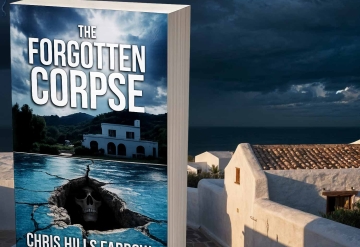

There is a question I get asked, now that The Forgotten Corpse is out in the world alongside the Paula Langford books: how do you write both?
There is a particular kind of reader who will tell you, with some satisfaction, that they knew something was wrong from the very first page. Not who did it, not what exactly happened, but that the world of the novel was tilted, that something beneath the surface was waiting to surface. They cannot always point to what gave it away. That is the point.
I've always had a soft spot for the cosy mystery. There's something deeply satisfying about a story where the world is contained, the puzzle is elegant, and justice is served neatly by the final chapter. Having written a few cosies myself, the Paula Langford series included, I know that world well. I know how to pace it, how to plant a clue without telegraphing it, how to make a village feel like a living community rather than a painted backdrop. It's a craft I've come to love, and I don't intend to leave it behind.
Writing a second type of book is a humbling experience. I say this as someone who has written cosy mysteries, such as the Paula Langford mysteries, and has some idea of how they work, how to pace them, how to plant clues, how to balance the warmth and the wickedness, and how to end a chapter in a way that makes putting the book down feel mildly irresponsible.
A red herring is a deliberate false clue meant to mislead or distract readers (or listeners) from the truth. The phrase itself has a storied history, famously coined in 1807 by journalist William Cobbett as a colourful tale about using a smoked fish to throw hounds off a trail. In this article, we’ll trace the origins of the term, share some playful examples, and explain why good writers use red herrings without making readers feel cheated.