
Cracked swimming pool in a cosy villa

From Cosy to Crime: Why I Wrote The Forgotten Corpse

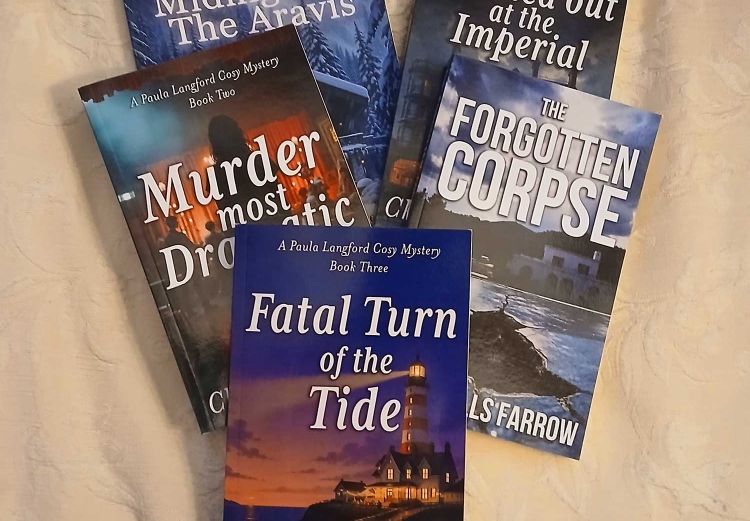
I've always had a soft spot for the cosy mystery. There's something deeply satisfying about a story where the world is contained, the puzzle is elegant, and justice is served neatly by the final chapter. Having written a few cosies myself, the Paula Langford series included, I know that world well. I know how to pace it, how to plant a clue without telegraphing it, how to make a village feel like a living community rather than a painted backdrop. It's a craft I've come to love, and I don't intend to leave it behind.

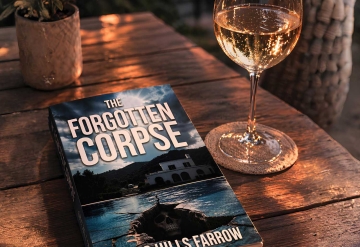
The Forgotten Corpse by Chris Hills Farrow

What I Learned Writing The Forgotten Corpse

Writing a second type of book is a humbling experience. I say this as someone who has written cosy mysteries, such as the Paula Langford mysteries, and has some idea of how they work, how to pace them, how to plant clues, how to balance the warmth and the wickedness, and how to end a chapter in a way that makes putting the book down feel mildly irresponsible.

The Forgotten Corpse by Chris Hills Farrow

Designing The Forgotten Corpse: Sun, Skulls and the Art of the Sinister Cover

 When it came to designing the cover for The Forgotten Corpse, I had two seemingly contradictory things I needed to achieve at the same time.

Boy with red herring and dogs

The Importance and History of Red Herrings

A red herring is a deliberate false clue meant to mislead or distract readers (or listeners) from the truth. The phrase itself has a storied history, famously coined in 1807 by journalist William Cobbett as a colourful tale about using a smoked fish to throw hounds off a trail. In this article, we’ll trace the origins of the term, share some playful examples, and explain why good writers use red herrings without making readers feel cheated.

Cartoon of a detective and suspect

The Art of the Alibi: Why a Good One Is Harder to Write Than You Think

There is a moment in almost every mystery novel where someone leans across a table, fixes the detective with a look of wounded dignity, and says: "I was nowhere near the library that evening. I was at home. Alone."

And the reader thinks: you did it.

cartoon of writer at a laptop with social media icons

Does Social Media Actually Work for Authors? I've Been Trying to Find Out…

 Here is a question I have been asking myself for quite some time now, usually while staring at a post that received three likes (one of which was my own, which I'm told doesn't count):

Does any of this actually work?

Never Miss A Mystery

Join The Newsletter

Never Miss A Mystery

* indicates required

Intuit Mailchimp