The Art of the Alibi: Why a Good One Is Harder to Write Than You Think
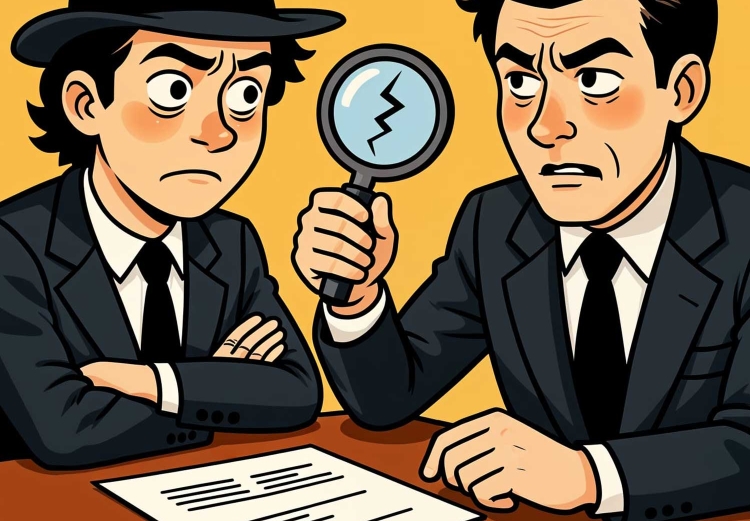
There is a moment in almost every mystery novel where someone leans across a table, fixes the detective with a look of wounded dignity, and says: "I was nowhere near the library that evening. I was at home. Alone."
And the reader thinks: you did it.
The alibi is one of the oldest tools in the mystery writer's kit. It has been around since Agatha Christie was deciding which Belgian to send to the next country house, and it shows no sign of retirement. But here's the thing nobody tells you when you sit down to write your first murder mystery: constructing a good alibi — one that is believable, satisfying, and ultimately unravellable — is genuinely one of the hardest craft problems the genre asks you to solve.
What an Alibi Actually Has to Do
On the surface, an alibi is simple. Your suspect claims to have been somewhere else when the murder occurred. Your detective — amateur or otherwise — has to either confirm or disprove it. Job done, chapter closed.
Except, of course, it isn't nearly that simple.
A well-constructed alibi has to do several things at once. It has to be plausible enough that the reader initially accepts it. It has to be specific enough to feel real. It has to contain — somewhere, quietly, without making a fuss — the flaw that will eventually bring it down. And it has to do all of this without the reader noticing that you, the author, have your thumb firmly on the scales.
That last part is the real challenge. Readers of mystery fiction are not passive. They are watching you. They know the genre's conventions, they've been burned before, and they have a highly developed instinct for when something smells off. Give them an alibi that's too neat and they'll smell the authorial interference immediately. Give them one that's too vague and they'll feel cheated when it collapses. The window of just right is narrower than it looks.
The Three Kinds of Alibi (And Their Weaknesses)
In my experience — both as a reader and as someone who has had to construct quite a few of these — alibis tend to fall into three broad categories.
The Witness Alibi. Someone confirms the suspect was elsewhere. This is the most common and, on the surface, the most reassuring. The problem, of course, is that witnesses lie. They misremember. They were paid. They were in love. They were half-asleep and not entirely sure what time it was. As a writer, the witness alibi is your most flexible tool precisely because it introduces a second character whose reliability can be quietly undermined. Used well, it doesn't just clear a suspect — it creates one.
The Documentary Alibi. A receipt. A CCTV timestamp. A signed hotel register. These feel more solid, which is exactly why they're so useful when you need to pull the rug out. Documents can be forged. Timestamps can be manipulated. A receipt proves someone was in a shop; it doesn't prove when they left, or by which door. The documentary alibi is especially satisfying to dismantle because the reader trusted it. They saw the evidence.
The Activity Alibi. The suspect was doing something that seemingly couldn't have been interrupted: performing on stage, delivering a speech, sitting in a dentist's chair. These are the most dramatic to disprove, and they require the most careful plotting. The classic move is to show that the activity had a gap — an interval, an early departure, a substitution — but you have to earn it. Pulling a gap out of nowhere in chapter seventeen feels like cheating. Planting it quietly in chapter four and hoping no one notices feels like craft.
The Flaw Has to Be There From the Beginning
This is, I think, where many writers go wrong.
It's tempting to construct your alibi and worry about how to break it later. After all, you know it needs to fall apart eventually — why not figure out the mechanics once you've established the structure? The trouble is that a flaw retrofitted into an alibi tends to feel like exactly that: something bolted on. Readers notice, even if they can't quite articulate why.
The flaw has to be baked in from the start. It has to be something that could have been noticed earlier, if only someone had looked at it slightly differently. The best alibi collapses are those where you flip back to the original scene and think: oh, it was always there. The receipt was for the wrong time of day. The witness had a reason to lie that was hiding in plain sight. The performance had an interval that nobody thought to question.
This means knowing, before you write the alibi scene, exactly how it's going to unravel. Which is uncomfortable if you're the sort of writer who likes to discover the story as you go. But for alibis, I'm afraid, a certain amount of advance planning is non-negotiable. The ending has to be hiding in the beginning.
The Reader's Role
Here's something worth remembering: your reader is not just watching the detective test the alibi. They're testing it themselves.
Mystery readers are active participants. They are cataloguing details, weighing inconsistencies, building their own theories. This means that your alibi has to hold up to a level of scrutiny that goes well beyond whatever your fictional detective applies to it. A sharp-eyed reader will notice if you've given your suspect an hour to drive somewhere that should take ninety minutes. They will notice if the witness who "confirmed everything" never actually specified the crucial half-hour window. They will notice, and they will feel obscurely cheated, even if they can't quite say why.
The alibi that satisfies is one that the reader could, in theory, have broken themselves — if only they'd been paying slightly more attention. The clues were there. The flaw was visible. They just didn't catch it. That's the feeling you're aiming for: not I was tricked but I should have seen it. Those are very different emotional experiences, and only one of them sends someone back to your next book.
A Word on the False Alibi That Protects Someone Else
One variation worth special mention: the alibi that turns out to be a lie, but not for the reason you expect.
Your suspect lied about where they were — but not because they committed the murder. They were somewhere they'd rather not admit. Meeting someone they shouldn't have been meeting. Doing something embarrassing, or private, or entirely unrelated to the crime. This is one of my favourite moves in the genre because it does double duty: it makes the suspect look guilty, it forces the detective to dig deeper, and when the truth emerges, it usually reveals something interesting about character. Nobody lies about nothing. What people lie to protect tells you a great deal about who they are.
The Satisfaction of the Collapse
When an alibi falls apart well, there's a particular kind of reader satisfaction that almost nothing else in fiction replicates. It's not just the intellectual pleasure of seeing the puzzle piece slide into place. It's something more visceral — the sense of a carefully constructed illusion finally giving way, like watching a very elaborate house of cards meet a gentle breeze.
Getting there requires patience, precision, and the willingness to go back through your manuscript several times asking: does this hold? Does the flaw appear, quietly, early enough? Does the collapse feel earned?
It's a lot of work for something that might take up three pages of your novel.
But then, the best things usually are.