The Importance and History of Red Herrings
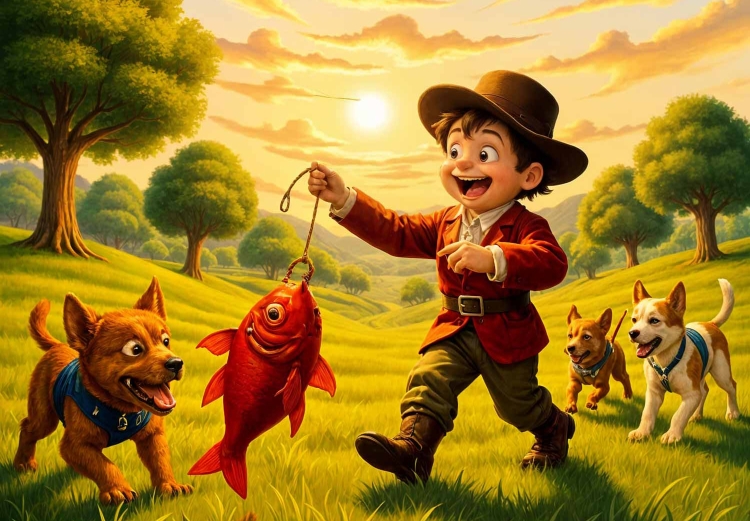
A red herring is a deliberate false clue meant to mislead or distract readers (or listeners) from the truth. The phrase itself has a storied history, famously coined in 1807 by journalist William Cobbett as a colourful tale about using a smoked fish to throw hounds off a trail. In this article, we’ll trace the origins of the term, share some playful examples, and explain why good writers use red herrings without making readers feel cheated.
What’s a “Red Herring”? (Definition and Origin)
Literally, a red herring is just a heavily smoked (reddish-brown) herring, preserved to last months. In the 17th and 18th centuries, such pungent herrings appear in jokes and hunting lore. The metaphorical “red herring” – a false lead – dates back centuries, but its modern meaning was popularised by William Cobbett. In 1807 Cobbett published an (almost certainly made-up) story in Cobbett’s Weekly Political Register about dragging a red herring to mislead hunting dogs. He used this tall tale to mock newspaper editors who had been misled by false reports (of Napoleon’s defeat) and to accuse them of following a “scent” off-topic. Cobbett’s colourful story stuck, and soon “red herring” meant any deliberate distraction. (Oddly enough, Cobbett’s story about hounds chasing a hare is actually the reverse of the literal hunting practice – huntsmen trained horses, not dogs, by dragging herrings as a scent trail.)
Before Cobbett, writers had used fishy metaphors. For example, a 1691 story by cleric Jasper Mayne humorously bequeathed a red herring to a servant as a trick gift. This is more literal (the “herring” was actually in the trunk!), but it shows the old association of a red herring with a practical joke. 18th-century newspapers and books also mention red herrings in passing as distractions. By the time Cobbett wrote, the idea was ripe for satire. After 1807, the term quickly caught on in everyday language: even 19th-century American financiers called preliminary stock prospectuses “red herrings” to warn investors they were incomplete.
Red Herrings in Stories and Media
Writers love a red herring because it makes a mystery twistier and more fun (when done fairly). In detective fiction or thrillers, a red herring might be a suspicious character, a misleading clue, or a false alarm that draws attention away from the real culprit. Agatha Christie’s mysteries, for example, are packed with viable suspects and clues that lead down blind alleys. Similarly, film and TV use visual or dialogue “traps” to keep audiences guessing. And even journalists and politicians can pull red herring tactics: sensational headlines or off-topic scandals can distract the public from thorny issues.
The key point is this: a well-placed red herring should feel plausible in context. When the big reveal comes, all those false leads make sense in hindsight – the reader (or viewer) thinks, “Ah, of course that clue pointed to this, not that.” A classic example of playful usage is in children’s media: A Pup Named Scooby-Doo (the 1980s cartoon) even named a bumbling detective “Red Herring” (complete with a sneaky wink at the audience). More seriously, the Harry Potter novels sprinkle multiple red herrings about characters’ loyalties (though we won’t spoil them here). In every case, the red herrings add suspense and twists without changing the ending.
Timeline in Words
- 17th–18th centuries: Writers and hunters occasionally mention red herrings as odorous fish or as metaphors for distraction. (In 1672, Jasper Mayne’s will includes a literal “red herring” joke.) Foxhunting manuals note using a drag-scent for training.
- 1807: William Cobbett’s famous article appears. He tells of boys dragging red herrings to throw hounds off a fox’s scent. This story gives the metaphor its modern meaning.
- 1830s–later: The idea spreads. Cobbett revisits the story in 1833, and by mid-1800s the phrase is common in print. Americans even coin “red herring prospectus” for incomplete stock filings.
- 20th century onwards: Red herrings become a staple of mystery novels, crime films and TV shows. Columnists and politicians also use the term metaphorically. It’s by now a fixed part of our vocabulary.
Notable Examples (Spoiler-Free)
- 1807, England (Journalism) – Cobbett’s Weekly Political Register: William Cobbett’s article about a boy misdirecting hounds with a red herring, used as a political metaphor.
- 1835, USA (Journalism) – The Great Moon Hoax: New York Sun newspaper’s sensational series (published Aug 1835) falsely claimed fanciful creatures on the Moon. Readers were delighted, if deceived, by descriptions of unicorns and moon-beavers.
- 1901, UK (Literature) – The Hound of the Baskervilles by Arthur Conan Doyle: Sherlock Holmes’ famous novel uses a legendary ghostly dog tale to mislead characters (and readers) before the real story is revealed.
- 1988, USA (TV/Cartoon) – A Pup Named Scooby-Doo: In this children’s cartoon, a recurring villain is literally named Red Herring, a silly nod to the trope.
- 2000s (Books/TV) – A Series of Unfortunate Events by Lemony Snicket: The books (and Netflix series) play with detective clichés and even feature a statue of a red herring as a running gag.
- 1999, USA (Film) – The Sixth Sense: This thriller directs viewers’ attention one way through most of the story, then surprises them at the end (we won’t spoil it!). It’s often cited as a classic cinematic red herring in action.
The Reader’s Trust – No Need to Feel Cheated
A good red herring is part of the fun of a mystery, not an insult to the reader. Most mystery fans secretly love a clever mislead, as long as it plays fair. Writers are expected to plant real clues along with the fake ones. As one mystery-writing guide puts it, readers “agree to be fooled – as long as it feels fair”. In other words, we’re happy to chase false leads if, in the end, the solution fits all the evidence. When the “aha!” moment comes, the red herrings should click into place, too. In a well-crafted story, a twist makes readers go “Of course!” rather than “Wait, that makes no sense”. So relax and enjoy the ride – the red herrings are meant to amuse, not to trick you permanently.