Why Mystery Readers Are the Best Readers
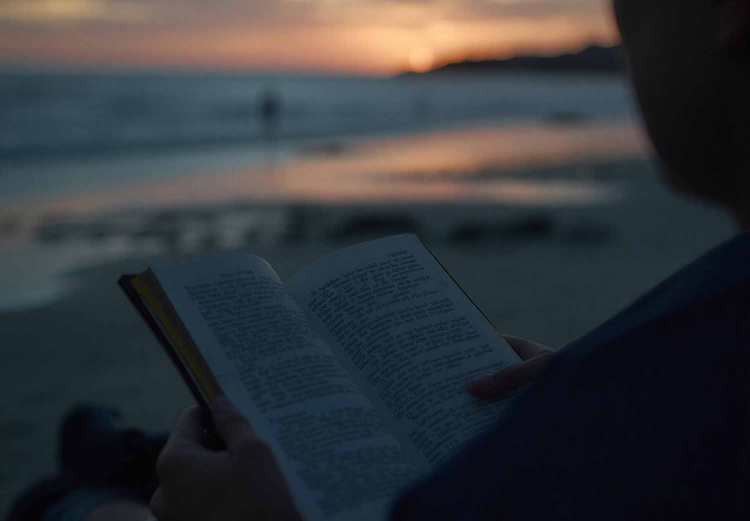
There is a look a mystery reader gets about two-thirds of the way through a book. You will recognise it if you have ever watched someone read one of my novels on a beach towel and seen their eyes narrow at a perfectly ordinary sentence about a character putting the kettle on. That sentence is not ordinary to them. It is evidence. They have already decided that the kettle means something, and they are furious with themselves for not working out what.
I love this about mystery readers, and I have loved it long before I started writing for them professionally. I think they are, without much competition, the best readers there are. Not the most well-read, necessarily, though plenty of them are that too. Best in the sense of most fully engaged with the actual mechanics of a story while it is happening to them.
They Read for Evidence, Not Just Enjoyment
Most readers, when they open a novel, are asking themselves whether they are enjoying it. Mystery readers ask this too, but underneath it runs a second, sharper question that never quite switches off. What does this mean? Why did the author choose to tell me this now, in this order, using these particular words?
A description of a garden is not just a description of a garden if you are reading a mystery. It might be a description of a garden. It might also be the exact spot where something was buried, or the reason a character was outside at eleven o'clock when they claimed to have been in bed. The mystery reader holds both possibilities open at once, and keeps holding them open, page after page, without collapsing into certainty until the book tells them they are allowed to.
That is a genuinely demanding way to read, and most people who do it for pleasure do not stop to notice how demanding it is. It has simply become the shape of how they consume a page.
They Trust the Author and Doubt Every Sentence
Here is the strange contradiction at the heart of a good mystery reader, and it is one I think about constantly while drafting. They have to trust me enough to keep reading, to believe that the pieces will eventually make sense and that I am not simply making things up as I go along and hoping nobody notices. At the same time, they have to doubt every single thing I tell them, because doubting it is the entire pleasure of the exercise.
This is a much finer balance than it sounds. A reader who trusts too completely will sail past the clues without registering them as clues at all, and the ending will land as a surprise rather than a revelation, which is a different and much thinner experience. A reader who doubts too completely stops trusting the story altogether and starts treating every character as a suspect and every scene as a trick, which exhausts the pleasure from the other direction.
The best mystery readers hold that balance instinctively. They believe me and suspect me in the same breath. It is, when you think about it, a fairly sophisticated act of literary faith.
They Remember Things
I have had readers email me about a throwaway detail from chapter four that I had genuinely forgotten I wrote, asking whether it was significant. Sometimes it was. Sometimes I simply needed a character to be doing something with their hands and had reached for the nearest object on the table.
This kind of attention is unusual, and it comes from a habit that mystery reading builds over years of practice. Every detail is provisionally important until proven otherwise, so the mind holding onto the book has to file everything away rather than letting most of it slide past. A throwaway line about someone's allergy, a mention of what time the post arrives, an aside about who used to work at the chemist before it closed. None of it can be safely discarded because the discard pile is exactly where a good mystery likes to hide its answers.
Readers of other genres are allowed to forget things. Mystery readers are not, and most of them would not want to be. The remembering is part of the fun.
They Are Generous With Every Character, Because Any of Them Might Matter
There is something quietly good about a reader who extends real attention to the shopkeeper who appears for one paragraph and the neighbour who only exists to complain about a fence. In most fiction, minor characters can be skimmed. In a mystery, they cannot, because the entire architecture of the genre depends on the possibility that anyone might turn out to matter.
This forces the reader into a kind of democratic attentiveness that I find genuinely admirable. Every person on the page gets a proper look. Every alibi gets weighed. The reader cannot afford to decide in advance who is worth their attention, because deciding that is exactly how you miss the person who did it. It teaches a habit of taking people seriously that I suspect quietly outlasts the book itself.
They Are Comfortable Being Wrong
A good mystery reader forms theories constantly and abandons most of them within a chapter or two. They suspect the vicar. Then they suspect the vicar's wife. Then a new piece of information arrives, and they cheerfully throw out both theories and start again, without any of the wounded pride that comes with being wrong in most other contexts.
I find this a rather lovely quality to watch in a reader, and I suspect it says something about the kind of person who is drawn to the genre in the first place. Being wrong is not a failure here. It is the whole method. You form the best theory available with the evidence in front of you, hold it loosely, and revise the moment something better comes along. There are far worse ways to move through the world than that.
They Read the Ending as an Argument, Not Just an Answer
When the solution finally arrives in a mystery, the reader is not simply being told who did it. They are being asked whether the case has been made. Does the explanation actually account for everything they were shown along the way, or has the author quietly smuggled in a piece of information at the last minute that nobody could have reasonably anticipated?
This is the reason mystery readers can be such a wonderfully unforgiving audience, and why writing for them keeps you honest in a way that other genres do not always require. They are not just asking whether the ending is satisfying emotionally. They are asking whether it holds up as an argument, sentence by sentence, against everything that came before it. A reader who has spent three hundred pages testing your evidence is not going to accept a solution that does not earn its keep.
I think that is the real reason I love writing for this readership above any other. They are paying proper attention the whole time, which means that when the ending finally lands, it lands on people who genuinely worked for it. There is no higher compliment a reader can pay a book than that kind of attention, sustained from the first page to the last, and mystery readers give it as a matter of course.