Why Mystery Novels Make the Best Gifts
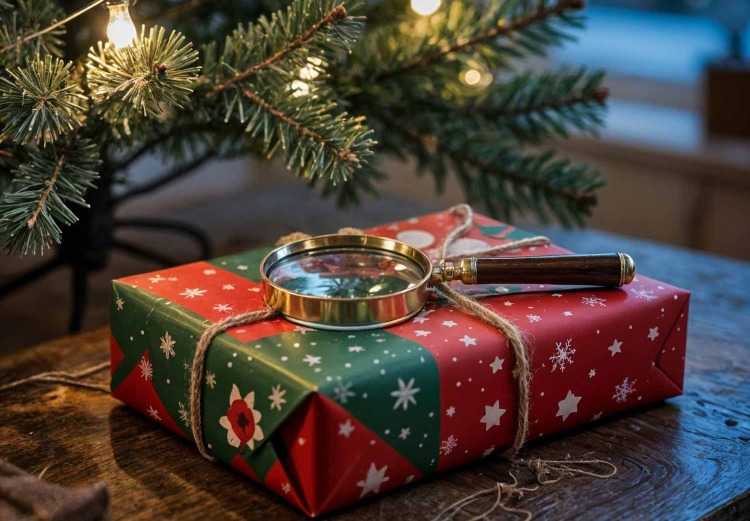
Every gift is a small mystery for the first few seconds after the paper comes off, which gives the mystery novel an unfair head start. The recipient turns it over and studies the back cover like someone examining a ransom note, and they are inside the case before they have found somewhere to sit. I have been thinking about this because the season for giving is nearly here, and I keep arriving at the same conclusion about what belongs under the tree.
I should declare an interest, since I write the things. To compensate, I checked my enthusiasm against some actual evidence. The evidence turned out to be on my side, which I admit is a little suspicious in itself.
The Tradition Is Older Than Most of Us
Publishers worked out nearly a century ago that people wanted to give each other murder in December. Agatha Christie’s publisher, Collins, timed her annual novel to meet the Christmas rush in the shops, and the slogan “A Christie for Christmas” became a fixture of their list. Hercule Poirot’s Christmas itself reached bookshops on 19 December 1938, which suggests considerable confidence that a person unwrapping a present would be delighted to find a corpse inside. Her fans took up the habit of giving and receiving the new Christie as a seasonal ritual, and the habit outlived the publishing schedule that started it.
The reason it lasts seems to be simple. Christie’s current publisher has described the appeal as the escapism everyone needs during a busy, cold month, and readers quoted by the Christie estate say much the same thing about a blanket and a good puzzle. December is crowded with obligations. A mystery offers a few hours somewhere else, and that is a generous thing to hand to another person.
It Works on People You Barely Know How to Shop For
Most gift problems are really knowledge problems. You know what a person does for a living and what they said about their holiday, and very little beyond that. A mystery is a safe wager in that situation. In a 2024 ThriftBooks survey of 2,000 American readers, mystery was the most popular genre overall at 45 per cent, and it led among baby boomers as well. The same company’s October 2026 survey found mystery and thriller the genre most often named by readers as the one they would most like to receive this holiday season, at 38 per cent. In Britain, the bestselling book of 2025 was Richard Osman’s The Impossible Fortune, the fifth Thursday Murder Club novel, which sold close to half a million copies by NielsenIQ’s count.
Genres that sit at the top of lists like these tend to have someone on your own list quietly hoping for one.
The genre also comes in different temperatures, which helps when you are guessing. A recipient who dislikes anything frightening can have a village mystery where the violence happens out of sight and somebody pours the sherry before the questioning begins. A person who reads with the landing light on can have something much darker. I wrote about the difference between those two promises in Expanding My Author Brand Beyond Cosy, and it is worth knowing which one your recipient would prefer before you buy.
A Mystery Is a Game You Can Hand Over
A mystery arrives with a job attached, which is to work out who did it before the detective does. The recipient gets to guess and to be wrong, and both of those turn out to be enjoyable in a way that few other presents manage.
The gift also keeps working after the last page, because a finished mystery is something people want to discuss. Whoever worked out the culprit wants to say so, and whoever did not wants it explained. The giver is the natural person to ask, so a mystery tends to produce a phone call, or a conversation over the washing up, in a way that a gift voucher has never managed.
It Is Kind to a Busy Month and a Modest Budget
Books remain a sensible purchase when money is tight. The October 2026 ThriftBooks survey found that 58 per cent of readers planning to give books expect to spend less than $20 on each one, and 70 per cent said they would be just as happy to receive a pre-owned copy of a book they wanted. Printed copies are still preferred by a wide margin, with 95 per cent of respondents in the 2025 survey saying they would rather give a physical book than a digital one. In the latest survey, 44 per cent said they were definitely prioritising gifts that involve no screen this year, with another 27 per cent leaning that way.
A mystery also keeps. A copy received in December can wait for a wet afternoon in January, when the decorations are down and the evenings are long, and it will be exactly as good as it was on the day it was wrapped.
Write Something Inside the Cover
Asked what makes a book gift feel most thoughtful, the largest group of readers in that same survey, 32 per cent, chose a note written inside. A mystery lends itself to this more than most books do. A line such as “I want your theory on the culprit by New Year” turns the present into a small arrangement between two people, and gives the recipient a reason to finish the book promptly and report back.
Even a plain “I thought of you when I read the blurb” does a good deal of work. People keep books with handwriting in them, and the inscription will outlast the plot.
Choosing the Right One
If you are unsure, ask what the person finished most recently and whether they enjoyed being frightened by it. That single answer will tell you whether to head for the cosy shelf or the darker one. When buying from a series, start with the first book, so that the recipient has somewhere to go next and you have a ready-made present for their birthday.
From my own shelves, the Paula Langford series begins with Checked Out at the Imperial and suits anyone who likes their detection polite, while The Forgotten Corpse is the one to choose for a reader who prefers a darker temperature and a longer memory for old crimes.
Wrapping paper will not disguise the shape of a book, and nobody has ever minded. The mystery begins once they open it.