Creating Atmosphere: Using Weather and Seasons in Mystery Writing
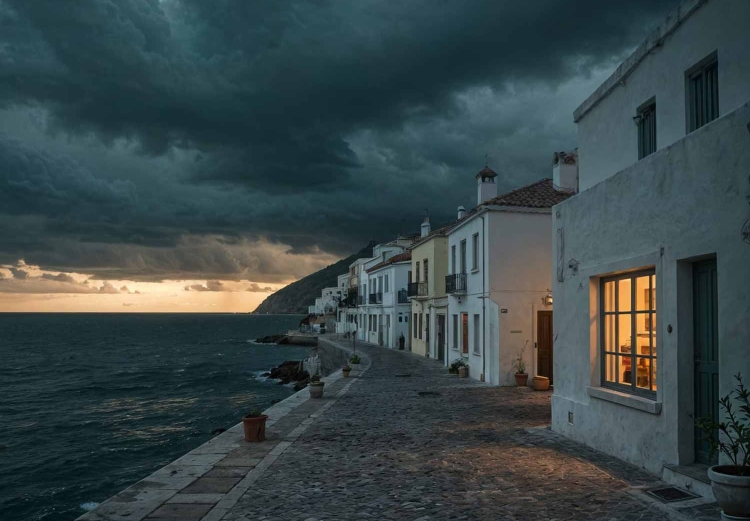
There's a type of writer's guilt that comes from opening a chapter with the weather. Somewhere along the way, "it was a dark and stormy night" became the punchline of an entire genre, and a lot of us absorbed the lesson a little too well. We stopped trusting weather to do anything except sit there being weather, and started apologising for it before we'd even used it.
Which is a shame, because weather and season are two of the hardest-working tools a mystery writer has, and most of us are using a fraction of what they can do.
Weather Is Not Decoration
Here's the thing about a description of fog rolling in off the sea. If it's just there to look moody, it's wasted. It's an expensive coat of paint on a story that could have got by without it. But if that fog is also the reason nobody saw who left the harbour at eleven that night, it earns its keep, doing atmosphere and plot at the same time.
I think about this a lot when I'm writing scenes set along the Costa Blanca, because the temptation with a sun-soaked coastline is to assume the weather has nothing to offer a mystery writer beyond a nice cover image. Everyone already knows what to expect from that particular stretch of coast. Which is exactly what makes the exceptions so useful. A storm rolling in off the Mediterranean, in a town that's used to nothing but sunshine, disrupts routine and gives your characters a reason to be somewhere they wouldn't normally be. Roads close and beaches empty, and the wrong people end up sheltering together indoors, which is where the interesting conversations happen. The weather that breaks the pattern tends to do more work than the weather that matches it.
Season as Structure, Not Just Setting
Seasons do something weather alone can't, which is give a story a sense of accumulated time. A single stormy afternoon is an event. A whole village sliding from the last stretch of summer into the shuttered quiet of autumn is a mood you can build a plot around.
Cosy mysteries in particular tend to lean on the rhythms of the year without always noticing they're doing it. The village fête that goes wrong, the off-season resort town where half the shops have closed for winter and the ones that stay open know exactly why. There's a reason so many amateur sleuths solve their crimes against a backdrop of some seasonal event. It gives the whole community a shared reason to be gathered somewhere, too distracted by the occasion to notice what's happening under their noses.
I used a version of this in the Paula Langford books without initially planning to. The off-season quiet of a coastal town, once the summer crowds have gone home and the people who actually live there are left with each other, turns out to be exactly the kind of pressure cooker a cosy mystery thrives in. There's nowhere much to hide, and everyone remembers everything.
Weather as Character Pressure
The most useful thing weather does in a mystery has little to do with atmosphere. It works on the characters themselves. Heat makes people short-tempered and careless. Cold makes them want to be indoors with people they'd rather avoid. A relentless run of grey days wears down a character's patience in a way a single dramatic storm rarely manages, because a storm passes and grey weather just settles in and stays, like an unwanted houseguest with opinions.
This is where I think a lot of writers undersell what they're working with. A heatwave can do more than set a mood. It can make an alibi harder to check, because everyone's memory of a blistering afternoon blurs into every other blistering afternoon. It can put people outdoors at odd hours because nobody can sleep, which means witnesses turn up in places they've no business being.
The Trap of Overdoing It
Of course, there's a version of this advice that goes badly wrong, and it's the one where every scene gets its own thunderclap. If the reader starts to notice that ominous weather always precedes a plot development, you've trained them to treat your storms as stage directions rather than storytelling, and the trick stops working. The most effective weather in a mystery is often the weather that isn't obviously symbolic. An ordinary grey Tuesday can carry more dread than a storm, precisely because nothing about it announces itself.
A Few Ways In
If you're looking for somewhere to start, try letting weather change a character's plans rather than their mood. A road closed by flooding, a heatwave that shuts the shops early. Practical consequences tend to feel more earned than atmospheric ones, and they often generate plot on their own.
Try tying a season to what a community is hiding rather than what it's celebrating. The empty summer villa nobody wants to talk about once the owners have gone home for the year. The allotment that only gets dug over properly once a year, right before the frost.
And try trusting a single well-placed detail over a paragraph of description. The reader doesn't need to be told it's a bitter January. They need one character to be the only person on the seafront in a coat, and everyone else wondering why.
Weather and season are quietly doing some of the story's heaviest lifting while pretending to just be the view out the window.
Now if you'll excuse me, I've got a Mediterranean storm to go and misuse responsibly.