How I Research Locations for My Mystery Novels
It can be embarrassing when a reader emails you to say the drive you described takes forty minutes longer in real life than it does in your book. I have not had that email yet, and I would like to keep it that way, which is roughly the whole reason this post exists.
When I Already Know the Place
The Forgotten Corpse is set close to where I live on the Costa Blanca, and by the time I started writing it I already knew a lot of the terrain. The roads, the light in the evenings, the way a town empties in the heat of the afternoon and fills back up again once the sun has lost some of its confidence. That familiarity is useful. It's also a trap, because knowing a place from years of simply living in it is not the same as knowing it well enough to put a fictional timeline against it.
So I checked the timings properly. If a character needed to get from one location to another in the book, I made the journey myself rather than trusting what I thought I remembered. Memory is generous with itself. It rounds a twenty-five-minute drive down to fifteen because that's how long it felt the last time you weren't paying attention to the clock. Doing the actual journey, at the actual time of day the scene required, told me things memory hadn't bothered to mention: where the traffic backs up, where the road narrows, where a character would genuinely lose five minutes looking for somewhere to park.
Building a Place That Doesn't Exist
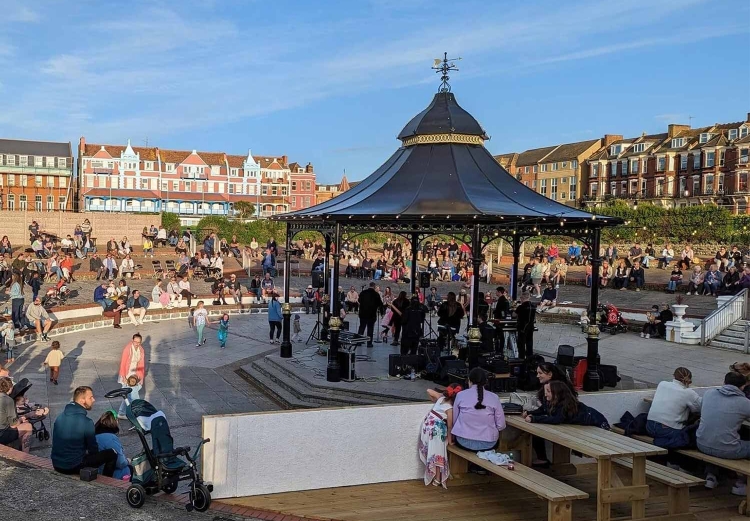
The Paula Langford books work differently, because a good deal of that series takes place in Brightcombe, which isn't a real town. It's an amalgamation. The bones of it come from Cliftonville, the quieter suburb of Margate in Kent, with a fair amount of Brighton layered on top, and pieces borrowed from a couple of other resorts along the southern English coast. None of those places appear in the book by name, but I know exactly which street corner or seafront view I was picturing when I wrote a given scene, even if I've reshuffled the geography to suit the plot.
I find this a genuinely enjoyable part of the process. You get to keep the atmosphere of somewhere real, the smell of a promenade in early autumn or the particular shabbiness of a pier that's seen better decades, without being bound by an actual street plan. If the plot needs a lighthouse exactly where a real town has a car park, Brightcombe can simply have a lighthouse. It answers to me and nobody else.
When I Can't Get There Myself
Not every setting is somewhere I can visit, or somewhere I already know well enough to draw from directly. In those cases, I go looking for everything I can find online, and photographs matter more to me than almost any other source. Written descriptions tell you what someone else noticed. Photographs let you notice things for yourself: the colour of the stone, how narrow a lane actually is compared with how it's described, what's growing along a wall that nobody thought worth mentioning in the text. I'll often work from dozens of images of the same street or building from different angles and different times of day, because a place looks different at eight in the morning than it does at six in the evening, and a scene set at the wrong hour can feel subtly wrong even to a reader who's never been within a thousand miles of it.
Why Any of This Matters
None of this research tends to show up on the page directly. Nobody wants three paragraphs about how long it takes to drive from A to B. But readers can tell, even without knowing exactly how, when a setting has been properly worked out rather than assumed. The confidence is in the details you don't have to explain, and those only arrive if you did the legwork first, sometimes literally.
I'll admit there's a slightly ridiculous image in this: an author driving the same stretch of road twice with a stopwatch running, just to make sure a fictional detective isn't accused of bending the laws of physics. But I'd rather be the writer who checked than the one who gets the email.