Building Tension: Lessons from Both Cosy and Dark Mysteries
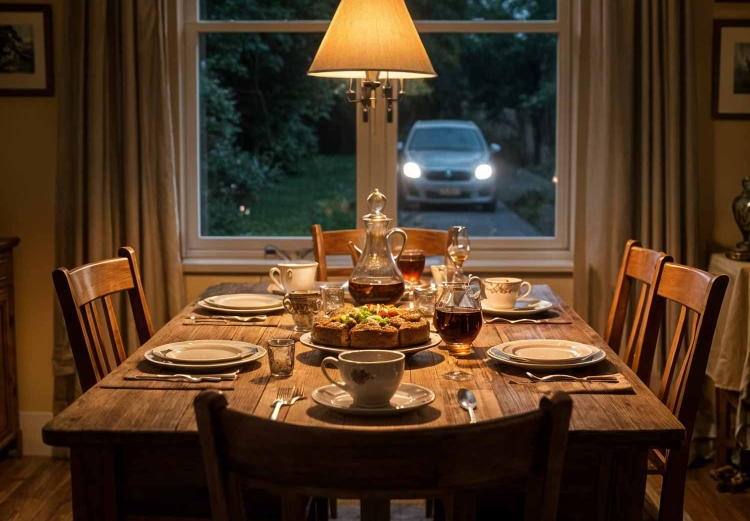
Tension has a reputation for being loud, all screeching tyres and slammed doors, so it still surprises me how much of mine arrives during conversations about who sat where at dinner. I write two kinds of crime fiction, one in which the local postmistress is interviewed over tea and one in which somebody might not survive the week. I had assumed they would need two entirely separate toolkits. They need rather fewer than that. The same handful of principles turn up at both desks, adjusted for temperature.
Tension Is an Open Question
The most useful idea I have come across is the literary agent Donald Maass’s notion of micro-tension. He argues that a steady stream of it makes readers take in every word, which is what produces a page-turner. He is also clear that tension has little to do with action, explosions and shouting. What it needs is something unresolved.
That is good news for a cosy writer. A character who asks a polite question and receives a slightly too polite answer has opened a gap, and the reader leans into it as eagerly as they would lean into a footstep on the stairs. In the darker books, the gap tends to be wider, with a watcher at the end of the road, but the mechanism is the same. Somebody wants an answer, and somebody else would prefer to keep it, so the reader waits to see who blinks.
Shut the Doors
Agatha Christie knew that fear sharpens when the exits are sealed. In a closed-circle mystery, a finite cast of suspects is trapped together, and each glance and contradiction carries weight. Writers who work in the form point out that the group turns paranoid and nervous, though this only works if the circle really is closed.
A village is a closed circle with better catering. Nobody can leave, because they live there, and the invitation to Thursday’s supper still has to be answered. My darker books close the circle differently. In The Forgotten Corpse, David Darnell finds a skeleton under his pool terrace, and the setting is as open as a holiday brochure. Even so, there is nowhere he can go that the discovery does not follow him, because it sits in his own garden.
Decide What Can Be Lost
Physical danger is the obvious currency, and the darker books spend it freely. Advice on thrillers keeps returning to the point that a protagonist needs something specific to lose, and that a flaw gives the threat something to lean on, since a hero with no weakness leaves the reader nothing to worry about.
Cosy mysteries trade in a different coin, and I think it is harder to spend well. Reputation, friendship, a livelihood and the standing of a family in a small town are all on the table when Paula Langford asks one question too many. The absence of graphic violence forces the writer to build stakes from emotional danger, relationships and community. If a wrong accusation would cost the sleuth her place at the table, the reader feels the wobble every time she opens her mouth.
I apply the same test to both strands. If the answer to “what does this character stand to lose in this scene?” is nothing, the scene will probably sag, however handsome the description of the weather.
Set a Clock, Then Choose Its Face
A deadline turns an investigation into a series of costly decisions, because without time pressure characters can investigate at their leisure, while with a clock every wrong turn costs something. Thrillers usually favour physical clocks, such as a victim who may not have long or a pursuer closing the gap.
Cosy mysteries run on social ones. The inspector will arrest the wrong person on Friday, or the houseguest leaves on Monday and takes the truth along in a suitcase. I find these just as effective, since the reader can feel the minutes passing without anyone needing to be in mortal danger. A sleuth with a deadline cannot afford to be polite for very long, and watching her try is half the fun.
Control the Length of Everything
Chapter length does a surprising amount of work. Thriller writers favour short chapters because brevity gives a propulsive reading experience, like pauses between beats placed perfectly. I lean on this in the darker books. A scene that stops with the sentence about the car still hanging in the air does more than a paragraph of explanation could.
Cosy mysteries can afford longer chapters, which lets a conversation over tea simmer properly. A single short chapter dropped in after one of those lands like a dropped plate, and the reader looks up from the page to check that everyone is all right.
Let Them Breathe
Nobody can stay tense indefinitely, and a book that tries to keep its reader there tends to produce numbness. Thriller advice includes balancing high tension with the occasional chance for the reader and protagonist to rest. One author of storm-trapped mysteries describes letting a wry observation briefly defuse a moment before the next discovery pulls the rug away.
This is the cosy genre’s gift to the darker books. The tea and cake are doing structural work. They let the reader’s shoulders drop, which means the next revelation has something to take away. In the thrillers, I try to copy the arrangement, placing a quiet scene and a dry remark just before the floor tilts.
One Exercise
Take a scene from whichever strand you usually write and rewrite it in the other. A cosy discovery in which somebody pours the sherry becomes a scene in which the finder locks the door first and wonders who else has a key. A dark confrontation in a car park becomes a conversation at a bring-and-buy sale, where nobody can raise their voice. Then see which questions stay open in both versions. Those are the ones doing the real work, and they are usually worth carrying back into the original draft.
I am off to check the seating plan for Sunday lunch, which on past form is where the real trouble starts.