The 5 Most Popular Cosy Mystery Tropes (And Why We Secretly Love Them)
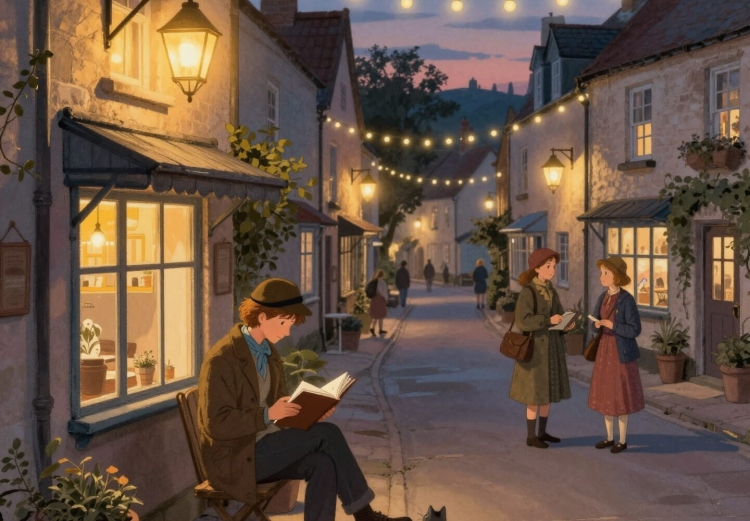
There’s something irresistible about cosy mysteries. Maybe it’s the quaint village bakeries. Maybe it’s the adorable cats that seem oddly good at crime solving. Or maybe it’s the fact that classic murder gets served with tea and scones rather than guns and guts. Whatever the reason, cosy mysteries are like literary comfort food—minus the calories but with all the guilty pleasure.
So let’s take a wander through the five most beloved cosy mystery tropes that keep us turning pages, grinning behind our bookmarks, and whispering “just one more chapter” at 2 a.m.
1. 🏡 The Charming Small Town with Big Secrets
Picture this: a perfect little village where the neighbours are a bit too friendly, the gossip travels faster than Instagram, and that sudden death at the annual bake-off raises more eyebrows than the third helping of lemon squares. These small towns aren’t just backdrops—they’re characters in their own right. Cozy settings give us familiarity, comfort, and the delightful illusion that everyone’s business is everyone’s business.
And let’s face it: we read cosies because we *want* that perfect village… until someone loses their life in it.
2. 🕵️♀️ The Amateur Sleuth Who Definitely Shouldn’t Be Taken Seriously
Unlike the stoic detectives in gritty thrillers, cosy heroes are often your baker friend, your bookstore owner, or your neighbour who once owned one true-crime podcast. These sleuths stumble onto crimes like they trip over a suspiciously placed cat toy, but somehow—with charm, curiosity, and occasional chaos—they solve them. This trope leans into relatability: they’re not trained investigators, just ordinary folks with extraordinary nosiness (or guilt, or accidentally incriminating evidence).
Honestly, if we were them we’d probably trip into the perp by chapter two.
3. 🐾 Animal Sidekicks with Questionable Motives
In cosy mysteries, pets aren’t just after treats—they’re partners in (gentle) crime. A cat with the sass of a retired Shakespearean actor, a dog who sniffs out clues by accident, or even the occasional parrot repeating suspicious phrases… these furry (or feathery) companions are basically stakeholders in the investigation.
Fact: if Sherlock had a cat, it would be meaner and way more correct.
4. 🍰 Baked Goods, Bookshops & Delightful Hobbies
Culinary cosy? Craft cosy? Bookstore cosy? Yes, yes, and oh yes. One of the genre’s biggest pleasures is the *theme*—whether your sleuth is a baker with a penchant for poison-free pastries or a librarian who files her clues under “P” for “Perpetrator.” These hobbies and settings give cosies that delicious extra layer of personality, often with recipes you might actually try (or at least admire).
Bonus: nothing says “comfortable mystery” like a chapter break right before dessert.
5. 💁♀️ Quirky Cast of Characters (And Endless Gossip)
If your town has characters like 'Ethel the nosy florist', 'Harold the suspiciously calm retired accountant', and 'Doc the scatter-brained vet', congratulations: you’re in classic cosy territory. These supporting players bring humour, colour, and enough gossip to fill a year’s worth of tea parties. Their quirks keep the mysteries lively, the stakes mild, and the reader thoroughly entertained.
Because let’s face it—without a cast of charming oddballs, what would our sleuth gossip about at lunch?
🧁 Why We Keep Coming Back for More
At their core, cosy mysteries are the genre equivalent of knitting while binge-watching a detective show and nibbling cookies. They’re safe enough to let you relax, clever enough to make you feel smart, and charming enough that you almost believe you too could solve the case—just as soon as you sweep up those crumbs.
So whether you’re a lifelong cosy fan or slipping into the genre for the first time, savour the quirks, savour the clues — and savour the scones! 🫖