Ordinary People, Extraordinary Courage
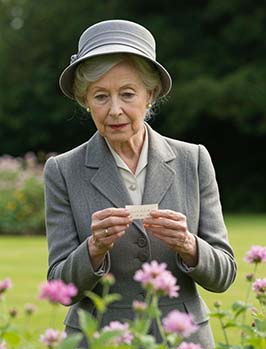
There is something deliciously satisfying about curling up with a mystery in which the smartest person in the room is not a badge-wearing detective but an apparently ordinary soul whose greatest weapons are curiosity and kindness. From the first page or first frame we know the police will arrive with clipboards and caution tape, yet deep down we are already waiting for the unqualified outsider—someone who bakes scones for the church fête or files library cards—to sidle into the case and quietly outwit everyone in authority. That spark of anticipation is what keeps me turning pages and hitting “next episode,” because nothing warms the heart quite like seeing a regular neighbour refuse to let evil have the final word.
The queen of this tradition is still Miss Marple, that deceptively fluffy knitter who proves, time and again, that years of observing village gossip are worth a dozen criminology degrees. When she peers over her spectacles in a BBC adaptation, you can almost hear every murderer in the drawing-room gulp. Her television heir is Jessica Fletcher, the polite New England novelist who can’t take a holiday without tripping over a corpse, yet who solves Cabot Cove’s weekly catastrophes with pure narrative instinct rather than police procedure. Father Brown strolls the same path in his cassock: parishioners unburden their sins, and the kindly priest turns confession into deduction, reminding viewers that moral insight often outruns forensic science. Together these characters reassure us that decency and perceptiveness—traits we like to think we possess ourselves—are more potent than a lab full of microscopes.
Of course, fiction is always evolving, and our own Brightcombe favourite Paula Langford (Checked Out at the Imperial) keeps that lineage alive. Paula may start each day polishing brass in the Imperial Hotel, yet when one of the staff meets an untimely end she slips into detective mode with little more than a housekeeping ledger, a pocketful of skeleton keys, and an affection for her late friend that refuses to stay silent. She does not quote ballistics reports or rattle off legal statutes; she works out people's movements and listens to the gossip and does a little snooping around, and suddenly the grand Victorian corridors yield their secrets. Readers cheer because Paula’s courage feels attainable—she acts not from training but from loyalty, and we like to imagine we would do the same.
Part of the magic lies in the snug world these sleuths inhabit. Cosy mysteries, by definition, keep the worst violence politely offstage and turn small communities—be they quaint English parishes or sleepy American harbours—into living chessboards where every neighbour is a potential queen or pawn. Because the crimes unfold where everyone knows your birthday and your dog’s name, an amateur’s social savvy becomes a forensic toolkit: the baker remembers who changed their regular order, the gardener notices whose roses were trampled, and suddenly the detective inspector’s official statements feel hilariously beside the point.
The roll-call of amateurs is wonderfully eclectic. Hamish Macbeth ambles through the Scottish Highlands with nothing but homespun common sense and a disdain for paperwork, proving that a village constable can behave like an amateur even while wearing the uniform. Nancy Drew, still racing her blue roadster nearly a century after her debut, thrills younger readers with the idea that a teenager armed only with a torch and unshakable optimism can topple criminal masterminds. Lord Peter Wimsey shows that a monocle and a taste for Mozart do not preclude mucking about in clues, and his aristocratic nonchalance masks a razor-sharp mind that delights in upending Scotland Yard’s pet theories. Each hero occupies a wildly different social niche, yet all share the same refusal to let rank or résumé dictate who may pursue justice.
Contemporary fiction has doubled down on that inclusivity. Richard Osman’s Thursday Murder Club gathers pensioners in a Kent retirement village, and Joyce Meadowcroft’s diary jottings prove that age is no barrier when it comes to spotting motive and opportunity over a cup of tea in the common room. Their escapades crackle with humour, yet beneath the banter lies a poignant insistence that life experience—births, bereavements, decades of people-watching—is itself a form of expert witness. When the retired spy, the former nurse, and the mild-mannered widow pool their skills, the official detectives cannot help but listen, and readers everywhere applaud the reminder that relevance does not retire at sixty-five.
Ultimately, we flock to amateur-sleuth stories because they hand the magnifying glass to people who look like us. They whisper that you do not need a badge or a PhD to confront wrongdoing; you need empathy, persistence, and the nerve to ask one more question after everyone else has gone home. Whether Paula Langford is straightening picture frames in Brightcombe or Jessica Fletcher is jotting plot notes on a transatlantic flight, these characters model a bravery grounded in everyday life. Their extraordinary courage is not found in action-hero stunts but in the quiet decision to speak up, poke about, and trust that truth matters. Long may their ordinary hearts continue to save the day—because every time they do, the rest of us believe a little more firmly that we might, in our own small corner of the world, do likewise.